
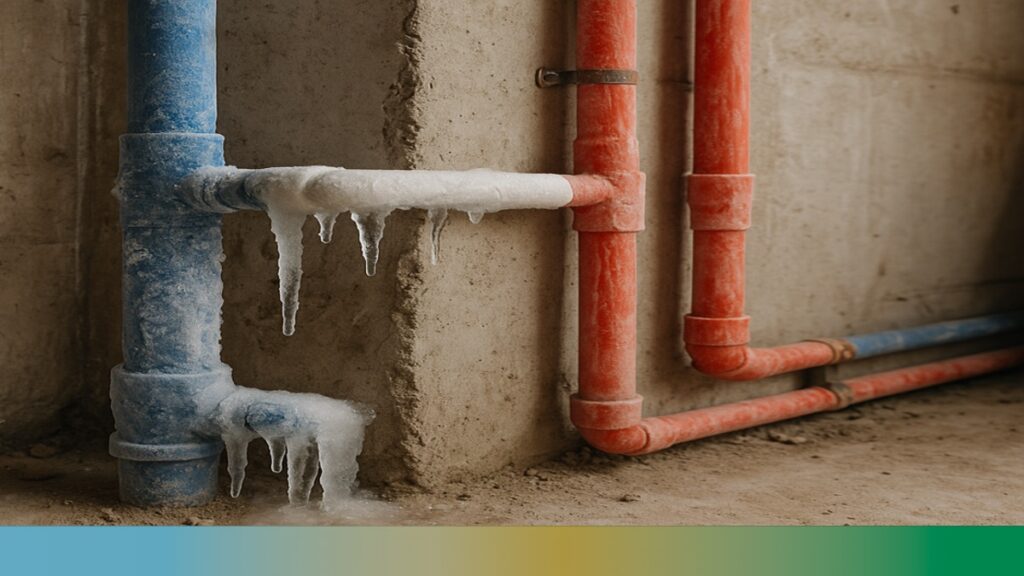
Cold snaps don’t wait for a building to be finished. In new multifamily construction, plumbing systems are especially vulnerable because insulation, heat, and permanent power often aren’t fully online. A single hard freeze can turn into thousands of dollars in damaged pipes, flooded units, delays, and emergency rework.
The good news: with proper preparation, most freeze-related plumbing failures during construction are completely preventable.
Here’s what every GC, developer, and construction manager should have on their radar when cold weather is coming.
1. Know the Freeze Timeline and Plan Early
Construction schedules don’t always align perfectly with the seasons. As soon as a project timeline approaches winter months, freeze-prep planning should be built directly into the schedule.
Key considerations include:
- When temporary power and heat will be available
- When water will be introduced into the plumbing system
- How many floors or phases will be active before heat is operational
- Who is responsible for monitoring weather alerts
- When it comes to draining down the building, keep in mind that for mild freeze events or ones that are predicted to be short in duration, the risks associated with draining down and re-energizing the building can be greater than the actual freeze event itself. Be sure to work closely with your plumbing contractor when diagnosing a freeze event to determine the best course of action.
The earlier the planning, the fewer last-minute decisions need to be made when temperatures drop.
2. Keep Water Out of the System Until It’s Safe
This remains the single most effective way to prevent freeze-related pipe failures.
Once water enters supply lines, the system becomes vulnerable unless:
- The building can maintain temperatures above freezing, or
- The system can be drained completely each day
If these conditions aren’t met, teams should work with the plumbing contractor to delay charging lines—even if fixtures are being set. A dry system is a safe system.
3. Protect Exposed Piping and Mechanical Areas
Before insulation, drywall, and permanent HVAC are installed, pipes sit in open, unconditioned spaces. These are the areas where most freeze damage occurs.
Protection should focus on:
- Exterior walls and balconies
- Parking-level water lines and overhead garages
- Stairwells and breezeways
- Amenity buildings still under framing
- Riser, meter, and pump rooms without heat
- Exposed P traps in unheated areas
Temporary insulation, foam, heat lamps, or portable heaters (following all safety rules) can offer crucial protection during a freeze.
4. Best Practices for Draining Down and Re-Energizing the System
Draining Process
- Turn off the main to the building.
- Open all house bibs.
- Open all angle stops and washer boxes in units and drain them.
- Tub Shower Valves: verify specific procedure with Plumber based on valve
manufacturer and installation assembly - After they are drained, turn off the angle stops, tub valves, washer boxes, water heater and water main valve going into unit.
- If building is in fixture phase, open T&P valve.
- Where possible, use an air compressor to blow out as much water as possible to help with water trapped in low points.
Re-Energizing Process
- Walk the Entire Building and make sure every valve, angle stop, and opening is closed. Ensure each unit isolation valve is in off position to allow for individual unit verification.
- Turn on the main valve slowly to fill mains.
- Where possible, a quick working pressure test could help ensure no open pipes in the main distribution line.
- Re walk each unit individually to ensure each and every valve is closed.
- Angle stops, tub valves, ice makers, washer boxes, water heater, etc.
- Turn on water to the units.
- Re walk unit and check for leaks.
- Repeat process until all units are complete.
This discipline helps prevent overnight freeze damage, especially during unexpected cold snaps.
5. Maintain Job site Heating in Key Areas
Even minimal heat can be the difference between safe and frozen pipes. Temporary heaters in mechanical rooms, rough-in areas, and exposed corridors help maintain temperatures above freezing.
Teams should:
- Follow all fire and safety requirements
- Assign someone to monitor heaters and fuel levels
- Keep heating equipment elevated and clear of combustibles
A relatively small investment in temporary heat can prevent extremely costly damage.
6. Use Heat Trace Where Applicable and When the Budget Allows
Heat trace provides dependable freeze protection on exposed or vulnerable piping throughout the life of the project. Keep in mind that while heat trace is a useful product in helping prevent issues during a freeze, it can also get expensive so it is recommended that you consult with your plumber to dial in an appropriate scope that works within the project budget.
7. Monitor Weather Alerts and Assign Accountability
Freeze damage often happens when no one is clearly responsible for monitoring conditions.
Every site should designate:
- A single person to track weather
- A written action plan for freeze events
- A communication chain to alert trades
Clear accountability ensures the team can act quickly before temperatures drop.
8. Perform a Full Inspection After Every Freeze
- Even if leaks are not immediately visible, inspections are critical after a cold event—especially in multifamily buildings with stacked plumbing systems.
Teams should inspect:
- Above-ceiling areas
- Mechanical closets
- Parking-level mains
- Riser and pump rooms
- Unit-to-unit wall penetrations
Early detection prevents minor damage from turning into major hidden issues.
Final Thoughts on Freeze Prep
A proactive freeze-prep plan:
- Protects the construction schedule
- Safeguards financial investment
- Reduces rework
- Keeps the project moving through winter
With the right steps in place, construction teams can confidently navigate cold weather without unexpected setbacks.
Got a Plumbing Project for Us to Bid? Please email: estimating@powerplumbing.com